The Commute Is Not the Enemy: Carrying a Pressed Shirt Through a British Morning
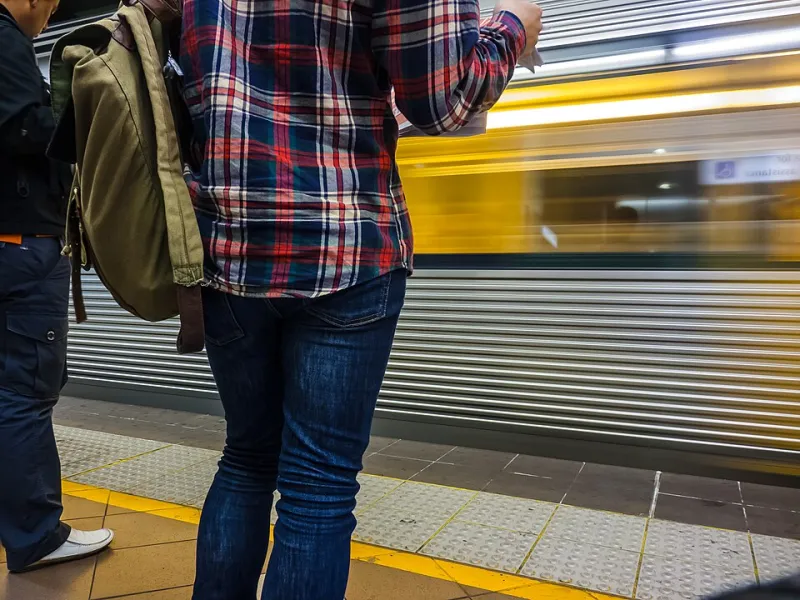
Photo: John Robert McPherson, CC BY-SA 4.0, via Wikimedia Commons
A freshly pressed shirt rarely meets its downfall at the ironing board. It meets it at the front door, halfway down the stairs, or on the 07:42 when you wedge a rucksack behind your back and lean into the window for forty minutes. The crease that appears across your lower back is not a character flaw. It is physics, fabric and a bag with too many pockets. The good news is that a commute does not have to undo a good press. With a few small changes to how you load, layer and sit, you can arrive looking like you meant it.
The crease map: why it happens where it happens
Most commuting creases are repeat offenders. There is the horizontal band across the lower back, caused by a backpack pressing the shirt into the curve of your spine. There are the shoulder-blade dents from straps pulled tight over a coat. There are the sleeve twists that appear when a padded jacket fights with a cotton cuff. Then there is the train-seat fold: the soft slump at the waist when you sit back and let the seat do the ironing in reverse.
Winter makes all of this worse. You are wearing more layers, the train is warmer than the platform, and a bit of damp from drizzle or sweat softens the fibres just enough to take a set. A crease that forms on a cool, dry shirt can often be smoothed out. A crease that forms while you are slightly clammy and then cools against a seat has a better chance of staying put. The aim is not to commute in a rigid shell. It is to reduce the pressure, the moisture and the twisting.
Load the bag for the shirt, not just the laptop
The backpack is usually the main culprit, and the fix is less about buying a new one than about how you pack it. Keep the heaviest, flattest item, usually a laptop or a folder, against your back. That creates a smooth panel instead of a lumpy outline. Put soft items such as a scarf or lunch bag towards the outside. Do not stuff a charger or keys into the panel that sits against your spine. A backpack should sit high and close, with the base around your waist rather than sagging towards your hips. If it is low, it will rock with every step and press a moving fold into your shirt.
If you are carrying a spare shirt rather than wearing it, do not fold it into a tight square and bury it under your gym kit. Fold it loosely along the natural lines, add a sheet of tissue at the collar to hold the shape, and place it flat in the laptop section or in a rigid folder. If space is tight, roll it around a soft jumper rather than creasing it into quarters. The goal is to avoid sharp folds and heavy weight in the same place.
Layer with a little slip
A coat that grips the shirt will bunch it up at the armpits and elbows. A smooth lining helps the shirt move underneath rather than stick. If you are wearing a wool coat over a cotton shirt, try a thin, smooth layer between them, or choose a coat that is not tight across the back. Keep the scarf outside the shirt collar rather than bundled inside it. And when you get on a warm train, unzip the coat before you sit down. Letting heat build up under a padded layer is a quiet way to soften creases into place.
The three-second reset before you sit
Before you lower yourself into a seat, take a moment. Smooth the shirt down your back with a flat hand. Sit upright first, then let your shoulders relax. If you are carrying a bag on your lap, rest it on your knees rather than pressing it into your stomach. On a crowded Tube or bus, stand tall and keep the bag at your feet where you can. It sounds fussy, but the difference between leaning back into a curved seat and sitting with a little space behind your lower back is often the difference between a soft fold and a hard crease.
The small touch-ups that actually work
A full iron is not coming out on the platform. A travel steamer can help, but it is another thing to carry and not always welcome in a busy office loo. A simpler kit is a lint roller, a small cloth and a little patience. In the washroom, dab a tiny amount of water on the crease, smooth it with your hand, and let it dry while you are at your desk. Do not rub hard. For collars and cuffs, a quick press with a warm hand and a smooth surface is often enough to make the shirt look cared for. If you keep a spare pressed shirt at work, you have a fallback that costs you nothing on the morning.
If the morning is already tight
Some commutes are not going to be managed with a packing plan and a three-second reset. If you are leaving before the house is awake and getting home after it has gone quiet, the realistic answer may be to take the home ironing out of the week altogether. A collection and return service means shirts arrive on hangers, ready to go into the wardrobe, and the only thing you have to manage is the bag by the door. For winter 2026, that can be as simple as a weekly bundle: a few work shirts, a couple of evening tops, and the odd item that has been sitting at the bottom of the pile. You still have to get through the commute. You just do not have to start it with the board out.
A short checklist for a sharper arrival
Pack the flat, heavy items against your back. Keep the bag high and close. Smooth the shirt before the coat goes on. Unzip on the train. Sit upright, or stand tall. Keep a lint roller and a spare shirt within reach. And if the pile is winning, hand it over without guilt. The commute is not a moral test. It is just a journey, and a pressed shirt should be able to make it.