What Your Ironing Pile Is Really Charging You: A 2026 DIY Audit
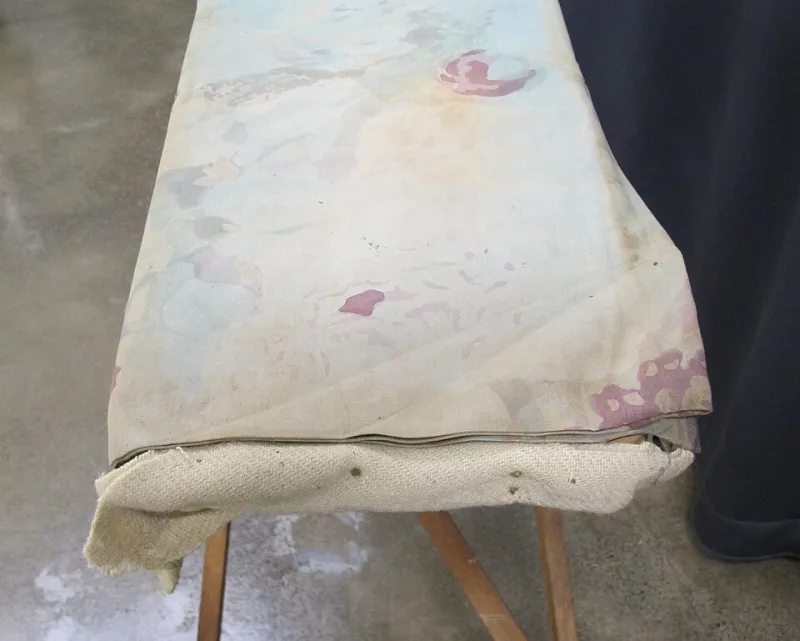
Photo: Unknown authorUnknown author, CC BY 4.0, via Wikimedia Commons
The cost that never makes it onto the spreadsheet
Ask most people what their ironing costs and they'll say something like 'nothing, really — I already own an iron.' That answer is technically true and completely wrong. The iron was bought in 2019. The board cover is held together with a sock. The electricity is buried in a direct debit nobody has looked at since the tariff changed. And the hour and a half every Sunday? That's the biggest line item of all, and it doesn't appear anywhere.
This is an audit, not a sales pitch. Run it honestly and you may well conclude that DIY ironing suits your household perfectly — plenty of people find the rhythm of it genuinely restful. But you should at least know what you're paying, because most of us have never actually added it up.
Set up four columns
Grab a piece of paper, or a note on your phone, and make four headings: Time, Kit, Energy, Overhead. We'll fill each one in.
Column one: time (and be honest about the faff)
Most people count the ironing itself and forget the rest. A realistic session includes:
- Getting the board out and up
- Filling and heating the iron (five minutes, minimum, unless you're using a steam generator)
- The actual pressing
- Hanging or folding
- Putting it away — or, more usually, leaving it on the spare bed for two days
Log it for two weeks. Use the timer on your phone, start it when you touch the board and stop it when the clothes are in the wardrobe. Multiply by 46 to get an annual figure, allowing a few weeks off for holidays.
A common result for a household of four is somewhere between 60 and 90 minutes a week. Call it 70 minutes. That's roughly 54 hours a year — more than a working week and a bit, spent standing in a hallway.
Column two: kit
Add up what you've actually spent on the equipment and divide by how long it lasts:
- Iron (replaced every four to six years, realistically)
- Board (five to eight years if it's a decent one)
- Board cover (every couple of years — they go crispy)
- Descaler, distilled water, a pressing cloth, the spray bottle you keep losing
- The occasional replacement because something got scorched and never quite came back
For most households this lands somewhere around £25–£50 a year, spread out and therefore invisible. It isn't a large number. That's worth saying plainly: the equipment is not what's expensive here.
Column three: energy
This one is easy to overstate, so let's be careful. An iron draws a lot of power but only while it's heating, and it cycles on and off throughout a session. A reasonable estimate for a 40-minute session is somewhere between 0.5 and 1 kWh, depending on the iron.
Check your own tariff unit rate (it's on your bill, usually in pence per kWh) and multiply. If you're on something around 25–30p per kWh, a weekly session is costing you roughly 15–30p. Over a year, that's a takeaway coffee, not a mortgage payment. Anyone telling you that electricity is the reason to stop ironing at home is selling something.
Column four: the overhead nobody prices
This is where the audit gets interesting, because it's the column that never gets counted and always gets felt.
- Space. A board that lives up in the hallway is a board you walk around forty times a day.
- Decision fatigue. The 'which of these is clean enough' question, asked at 7am, every morning.
- Deferred living. The Sunday evening that disappears into a basket, week after week.
- The re-wash. Damp washing that sat in the machine overnight and now smells faintly of nothing good.
- The late-night tax. The takeaway ordered because the evening went to the board instead of the kitchen.
You can't put a pound sign on those, but you also can't pretend they aren't there. Write them down anyway. Naming them is half the audit.
The hidden line items
While you're at it, look for the costs that don't show up in any column:
- Buying more shirts to avoid ironing. Common, understandable, and it just moves the pile rather than shrinking it.
- Replacing scorched items. A shiny collar is a ruined shirt, and a ruined shirt is £15–£30.
- Duplicates. The second iron because the first one lives under a pile of paperwork.
Adding it up
Take our typical household: 54 hours of time, around £35 of kit, roughly £12 of electricity, and a Sunday evening gone every week.
Total cash cost: under £50 a year. Total time cost: more than a fortnight of waking hours. That's the honest finding. DIY ironing is cheap in money and expensive in evenings — and most of us have been treating the second figure as though it were free.
That reframing matters, because it changes the question. It's not 'can I afford to outsource my ironing?' It's 'what would I do with 54 hours?' If the answer is 'work a bit more' or 'actually see my children' or 'sleep', then the comparison is no longer close.
What a collection-and-return service actually replaces
Worth being precise, because people assume it's only the pressing. A good service takes the whole stack off your hands: you bag it, it's collected from your door, and it comes back pressed and on hangers. The board stays in the cupboard. The Sunday evening stays yours.
It also absorbs the overhead column — the triage, the 'is this clean enough', the hanging, the putting away. What you're buying isn't ironing. It's the end of a weekly admin task that has been quietly running your calendar.
Ask yourself three questions
- Is the time you spend at the board competing with something you'd rather be doing, or with paid work?
- Does your pile regularly reach emergency-wash territory, where you're ironing the shirt you're about to wear?
- Do you own fewer than a week's worth of shirts per person, so the laundry volume is forcing near-daily ironing?
Two or more yeses and a hybrid approach is worth testing — maybe just shirts and bedding, maybe fortnightly rather than weekly.
Try it before you commit
Don't overhaul your whole routine off the back of an audit. Send one bag: the school shirts, the linen dress that's been wrinkling in the wardrobe since July, the bedding. See what comes back and whether the week feels different. Then decide.
If the audit says you're happy as you are, genuinely — keep the board. But at least you'll know what it's charging you.