The Care Label Is a Rumour: Pressing Preloved Silk Without the Fear
There is a particular thrill to finding a silk blouse in a charity shop for the price of a sandwich. It is closely followed by a particular fear: the label is gone, or faded to a pale grey smudge, or it says something ominous in French. You bring it home, hold it up to the window, and wonder whether your iron is about to turn a £6 miracle into a £6 cautionary tale.
This is not a chemistry lesson. It is a plan for pressing preloved silk and other mystery fabrics with a bit of nerve and a lot of caution. Whether the piece came from a hospice shop, a car-boot sale or a Vinted bundle, the approach is the same: assume nothing, test quietly, and work in small, low-risk steps.
First, Treat the Label as a Rumour
Care labels are useful, but they are not gospel. They fade. They get cut out because they scratch. They sometimes say dry clean only when the manufacturer was simply covering itself. And on second-hand pieces, the label may describe a different life entirely.
So do not start by ironing. Start by looking. Turn the garment inside out. Check the inside hem, the side seams and the facing. Look at the stitching, the lining and any spare buttons. A well-made silk blouse often has French seams or a clean bound edge; a cheap polyester imitation can look crisp on the hanger but feel slick and slightly squeaky between your fingers.
The Kitchen-Table Fabric ID
You do not need a lab coat, but you do need good light. Hold the fabric up. Silk tends to have a soft, slightly irregular sheen and a cool, dry handle. Polyester is more uniform and can feel slippery or faintly plastic. Viscose is limp and cool, and it creases sharply rather than softly. Blends are the tricky middle ground, which is why the hidden-seam test matters more than guesswork.
If the piece is lined, pay attention to the shell rather than the lining. If it is beaded, embroidered or heavily structured, stop reading the ironing advice and ring a professional. Some bargains are worth admiring from a distance.
The Hidden-Seam Test, Step by Step
This is the most useful five minutes you will spend on a second-hand find.
- Turn the garment inside out and find an inside hem or seam allowance that will never be seen.
- Lay a clean cotton pressing cloth over that area. An old pillowcase or a plain tea towel works well.
- Set the iron to its lowest heat, with steam switched off.
- Press for five to ten seconds. Do not slide the iron; lift it and set it down.
- Let the fabric cool completely before you check it.
If the test area looks fine, you can proceed carefully. If it has gone shiny, stiff, puckered or suspiciously smooth in a bad way, do not iron the garment. Steam it from a distance or hand it to someone who presses for a living. A melted fibre does not recover, and neither does the mood.
Steam Is Your Friend, Until It Is Not
Steam is brilliant for relaxing creases in silk, viscose and wool. It is also capable of leaving water marks on delicate fabrics, especially if your iron sputters or your water is hard. Use distilled or filtered water if you have it, and keep the iron moving or hovering rather than resting.
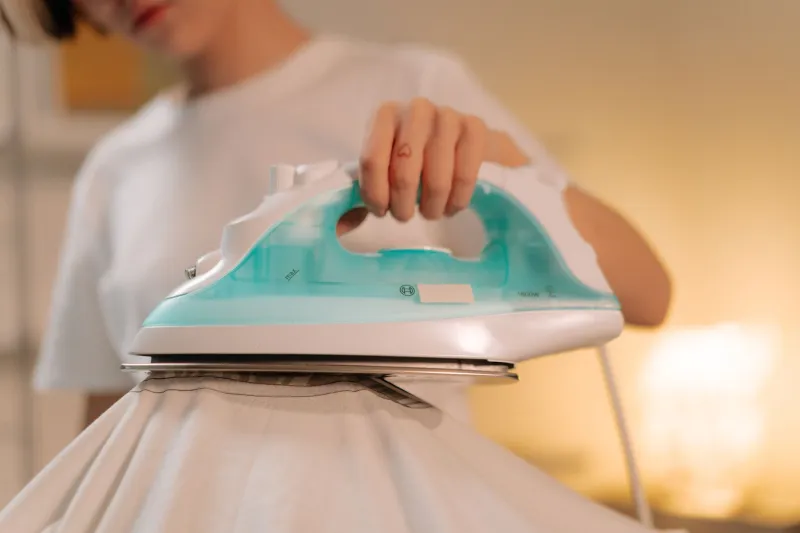
A handheld steamer is ideal for a quick refresh. Hang the garment on a hanger, steam from the inside, and let it dry fully before wearing. If you are using an iron, hold it a centimetre or two above the fabric and let the steam do the work. Do not press down hard. Silk does not need persuasion; it needs a calm suggestion.
Cool Iron, Light Touch, Pressing Cloth
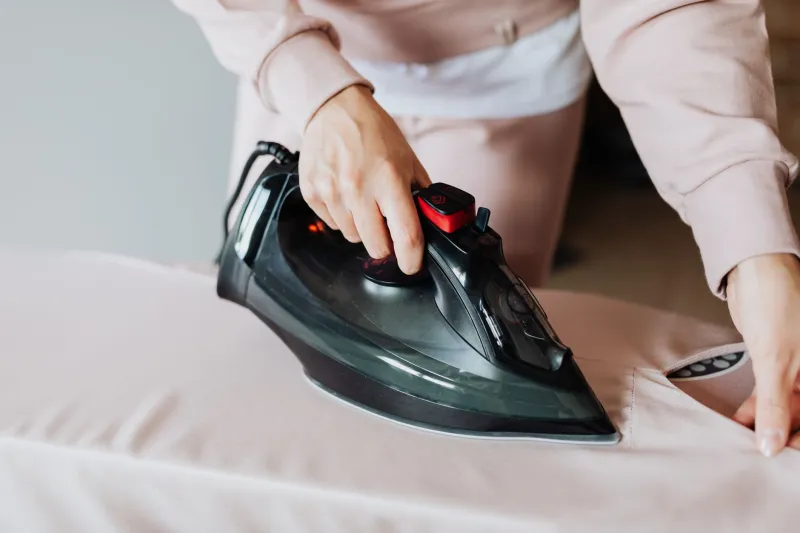
When you do make contact, keep the heat low and the pressure light. Use a pressing cloth every time. Work in sections: collar, cuffs, sleeves, body. Press the inside of the garment where you can, especially on dark colours that show shine. Let each section cool before moving on.
Avoid pressing seams flat and hard, particularly on silk. You want the seam to lie neat, not to become a permanent shiny ridge. If a crease is stubborn, try a slightly damp pressing cloth and a cool iron rather than turning up the heat. Patience is cheaper than replacement.
What If It Really Is Dry Clean Only?
Sometimes the label is right. Structured jackets, lined vintage dresses, beaded evening pieces and anything with a delicate print should go to a professional. That is not a failure. It is the difference between wearing the bargain to a winter do and explaining to your host why you are carrying a scorched sleeve.
For simple silk blouses, scarves and camisoles, a cautious cool press is often enough. If the piece is deeply creased from storage, hang it in a steamy bathroom for twenty minutes first. Let the room do the preliminary work, then finish with a gentle steam or a cool iron.
A Short Checklist Before the Winter Do
Turn it inside out. Test a hidden seam. Use a pressing cloth. Keep the heat low. Do not use perfume or deodorant near the fabric before pressing. Let the garment cool completely on the hanger before you try it on. And if the fabric feels unlike anything you have pressed before, stop and ask for help.
Second-hand silk is worth the care. It has already survived one owner, a charity-shop rail and a carrier bag. With a cool iron and a little restraint, it can survive your winter party season too.